


Fluid Tech Provides Control Valve Service And Repairs For Reliable Process Performance
Control valves work hard. They regulate flow, pressure, temperature, level and process stability every hour your plant is running. When a control valve starts sticking, leaking, drifting or responding slowly, the problem rarely stays isolated. It can affect product quality, energy use, plant safety, maintenance planning and production output.
Fluid Tech provides control valve service and repairs for industrial plants that need dependable valve performance, accurate control and practical technical support. Whether you’re dealing with poor valve response, actuator faults, seat leakage, damaged trim, calibration issues or general wear, our team can help assess the problem and restore the valve to proper working condition.
A control valve is not just another mechanical item in the pipeline. It’s part of the control loop. If the valve doesn’t respond correctly, the process won’t behave correctly either.
Why Control Valve Maintenance Cannot Be Ignored
Many control valve problems build up slowly. A valve may still open and close, but that doesn’t mean it’s controlling properly. Small changes in friction, wear, leakage or actuator performance can reduce accuracy long before the valve fails completely.
Common warning signs include:
- Slow or unstable valve movement
- Poor response to control signals
- Valve hunting or overshooting
- Air leaks from pneumatic actuators
- Packing leaks around the stem
- Seat leakage when the valve is closed
- Unusual vibration or noise
- Inconsistent flow control
- Positioner faults or calibration drift
- Increased maintenance callouts on the same line
When these issues are left too long, they can lead to unplanned shutdowns, product losses, higher operating costs and unnecessary damage to surrounding equipment.
Regular control valve servicing helps identify faults early before they turn into bigger failures.
Control Valve Repairs For Industrial Applications
Fluid Tech works with control valves used in demanding process environments. These may include chemical plants, mining operations, water treatment works, power generation plants, pulp and paper facilities, petrochemical sites, food processing environments and general industrial process plants.
Each site has different operating conditions. Some valves handle clean fluids. Others deal with steam, slurry, abrasive media, corrosive chemicals, high temperatures or aggressive process fluids. That’s why control valve repair work must be based on the valve design, service conditions and actual symptoms on site.
A proper repair process may include inspection, stripping, cleaning, trim assessment, actuator checks, pressure testing, calibration and final functional testing. The goal isn’t only to make the valve move again. The goal is to return it to reliable control duty.
What Our Control Valve Service Can Include
Control valve service and repairs can involve several mechanical, pneumatic and instrumentation-related checks. Depending on the valve type and condition, Fluid Tech can assist with:
- Valve inspection and fault finding
- Strip, clean and assessment work
- Trim, plug, seat and cage inspection
- Gland packing replacement
- Seat leakage assessment
- Actuator inspection and repairs
- Diaphragm and seal replacement
- Pneumatic tubing and air supply checks
- Positioner setup and calibration
- Stroke testing and functional checks
- Control loop performance support
- Recommendations for replacement parts or valve upgrades
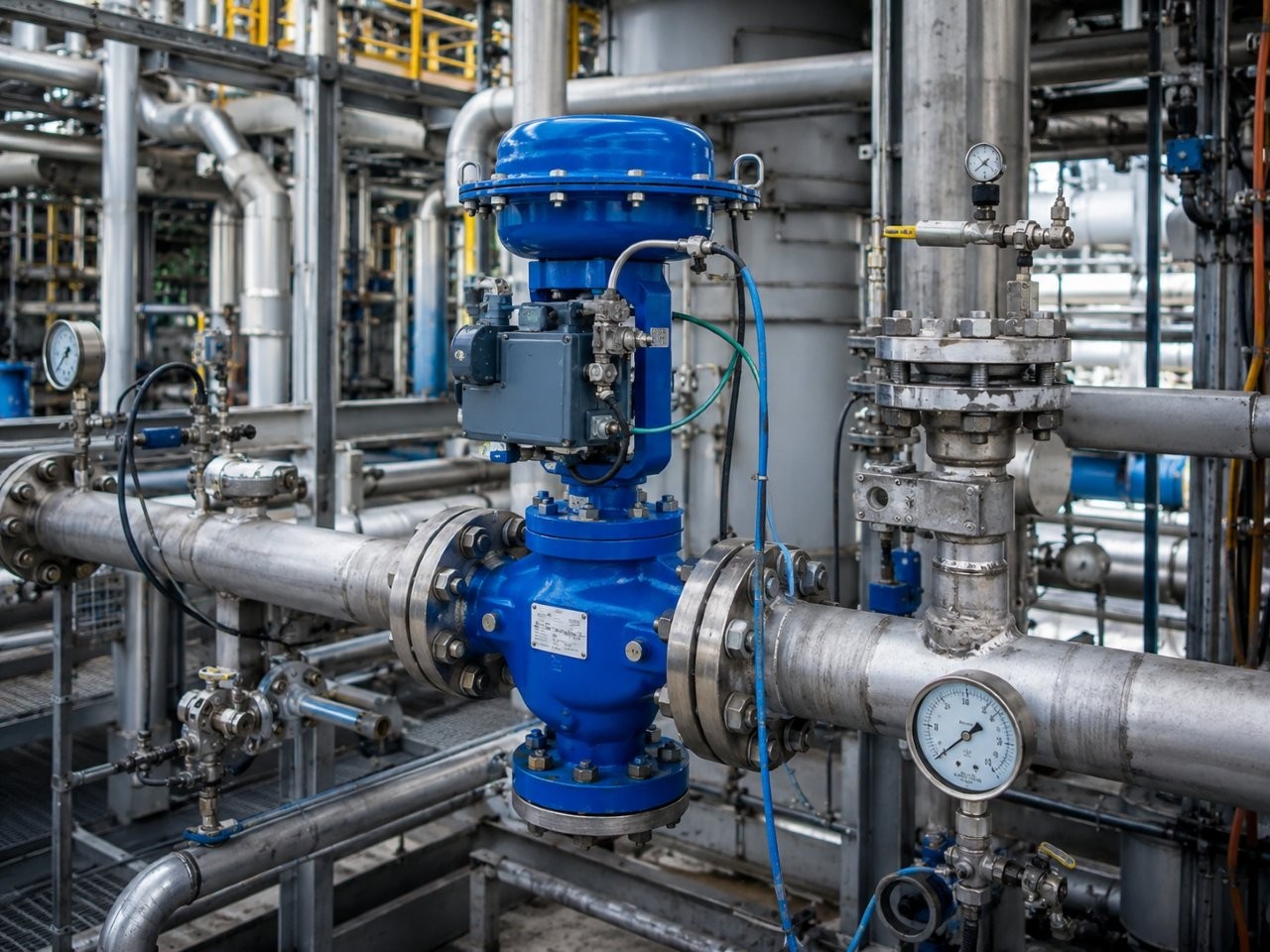
Some valves only need recalibration or minor service work. Others may require more detailed repairs due to corrosion, erosion, worn trim, damaged seats or actuator failure.
A proper assessment helps determine the most practical option.
Seat Leakage And Shutoff Problems
One of the most frustrating control valve issues is leakage at shutoff. A valve may appear closed, but fluid still passes through the seat. In some processes, this can cause product contamination, process instability, wasted media or safety concerns.
Seat leakage can be caused by several factors:
- Worn or damaged seat surfaces
- Erosion from abrasive flow
- Incorrect actuator force
- Poor plug or ball alignment
- Debris trapped in the valve
- Damaged seals
- Incorrect valve selection for the service
Fluid Tech can inspect the valve and identify whether the issue can be repaired through servicing, replacement parts, trim work or whether the valve is no longer suitable for the application.
Need Valve Service/Repairs? Call us on 082 414 6756

Actuator And Positioner Repairs
A control valve depends on more than the valve body. The actuator and positioner are just as important. If the actuator doesn’t provide proper force, or if the positioner isn’t calibrated correctly, the valve will not respond accurately to the control signal.
Typical actuator and positioner problems include air leaks, weak response, incorrect stroke, signal mismatch, sticking movement, damaged diaphragms, worn springs or faulty feedback.
These faults can make a control valve appear unreliable even when the valve body itself is still in good condition. That’s why our service approach looks at the complete valve assembly, not only the visible mechanical parts.
Control Valve Calibration And Stroke Testing
Calibration is essential for accurate process control. A valve that is slightly out of calibration can cause the control loop to overcorrect, hunt or respond unevenly.
Control valve calibration may include checking the input signal, confirming valve travel, setting the positioner, testing open and closed positions, and verifying movement across the full stroke.
Stroke testing is also useful for identifying sticking, deadband, hysteresis and other movement-related issues. These problems are common on older valves or valves operating in dirty, abrasive or high-temperature environments.
A well-calibrated valve gives operators and control systems a more reliable response.
Repair Or Replace? Getting The Decision Right
Not every faulty control valve needs to be replaced. In many cases, servicing or repairs can restore performance at a lower cost than full replacement.
However, repairs are not always the best long-term decision. If a valve is badly worn, repeatedly failing, incorrectly sized or unsuitable for the process media, replacement may be the more reliable option.
Fluid Tech can help assess the condition of the valve and recommend a practical way forward. The decision may depend on:
- Age and condition of the valve
- Availability of spare parts
- Severity of trim or body damage
- Cost of repair compared with replacement
- Criticality of the valve in the process
- Previous failure history
- Suitability of the valve for current operating conditions
This helps maintenance and engineering teams avoid spending money on repeated repairs where a better valve solution is needed.
Need Valve Service?Repairs?

Supporting Plant Reliability And Uptime
Control valve problems can cause serious disruption when they affect critical process lines. A valve that fails during production can force operators to bypass the control loop, reduce output or shut down part of the plant.
Reliable control valve servicing helps improve plant availability by reducing unexpected failures and giving maintenance teams better visibility of valve condition.
For plants with many valves, planned servicing can also help prioritise repairs. Critical valves can be assessed first, while less urgent items can be scheduled into normal maintenance windows.
This practical approach supports safer operation, better planning and more stable process control.
Why Choose Fluid Tech For Control Valve Service And Repairs
Fluid Tech understands that control valves are part of a larger process system. A repair must do more than replace worn parts. It must support the valve’s ability to control accurately under real operating conditions.
Our team can assist with control valve inspection, repairs, actuator support, positioner calibration, fault finding and service recommendations for demanding industrial applications.
We work with plant teams that need clear answers, practical repair options and dependable technical support. Whether you’re maintaining existing valves, dealing with repeated failures or reviewing valve performance across a plant, Fluid Tech can help you make informed decisions.
Speak To Fluid Tech About Control Valve Service And Repairs
If your control valves are leaking, sticking, drifting, responding slowly or causing process instability, it’s worth having them assessed before the problem becomes more expensive.
Speak to Fluid Tech for professional control valve service and repairs. We can help inspect the valve, identify the cause of the fault and recommend the most practical repair or replacement option for your application.
Need Valve Service/Repairs? Call us on 082 414 6756
Need Valve Service/Repairs?
Download our certificates here:
📞 Contact us today to book testing, emergency repair, or predictive asset management support.